

Parallel Fifths in Bach
Are they 'mistakes?'

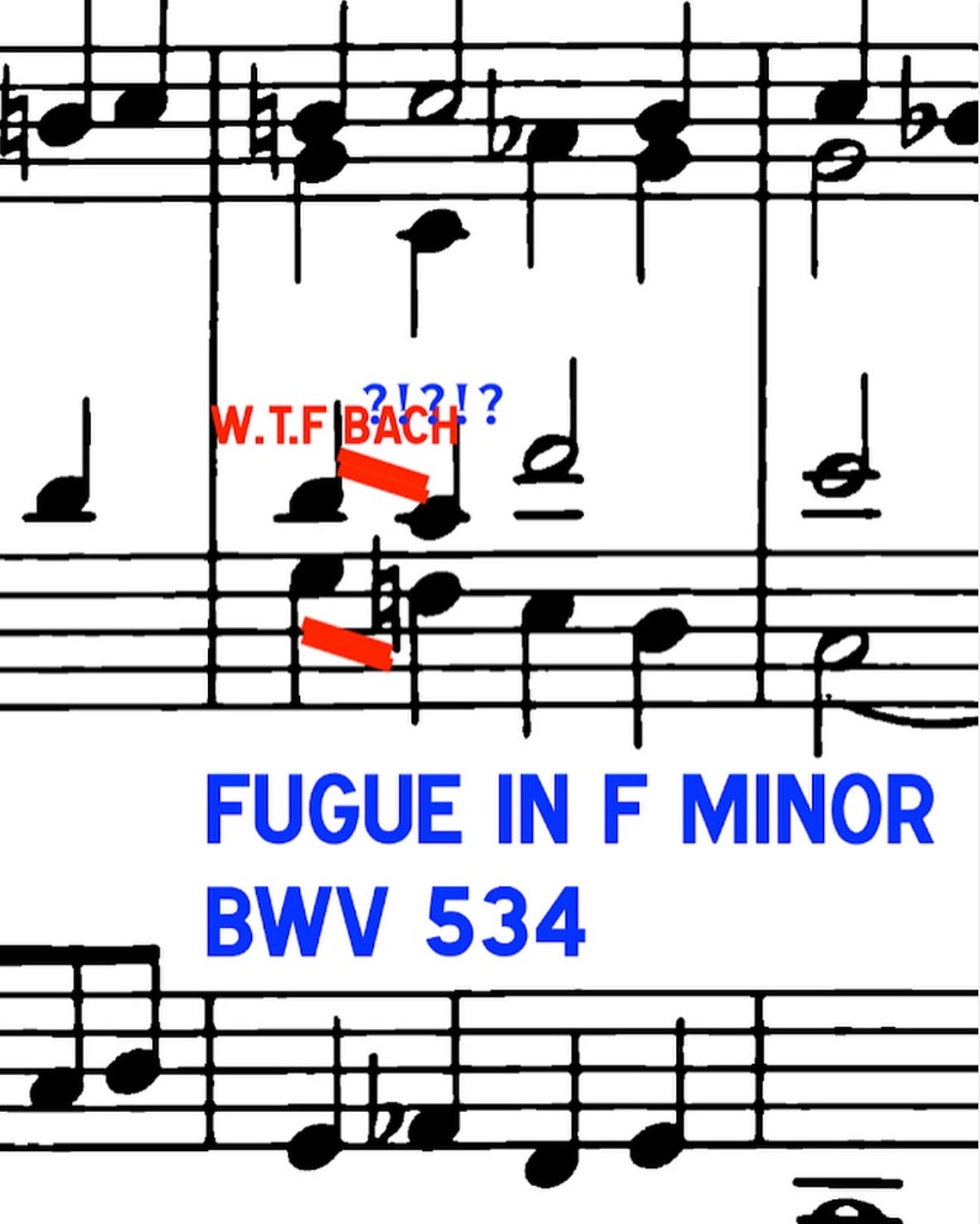
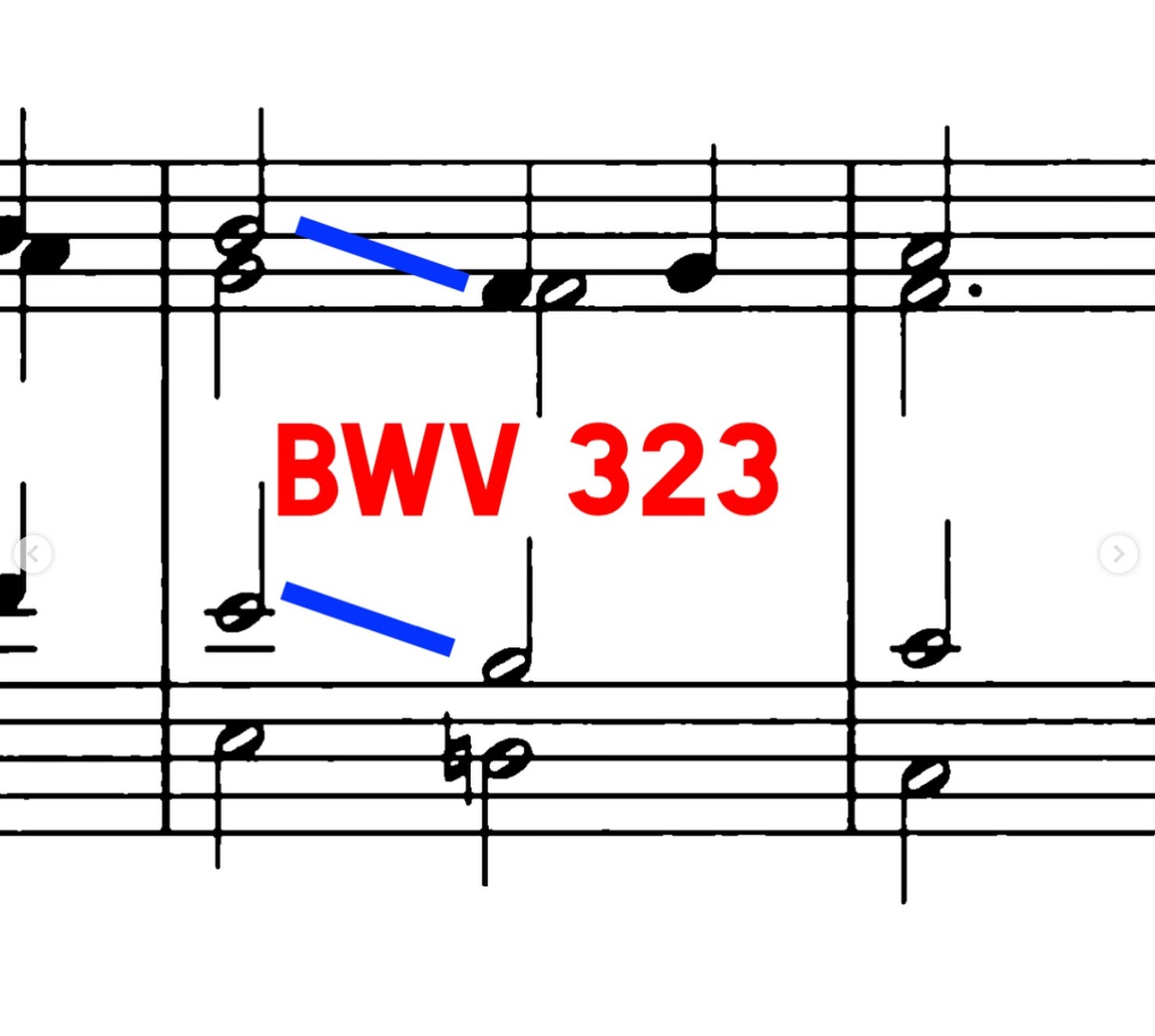
I recently made two posts on Instagram about ‘parallel fifths’ in Bach’s music. For whatever reason, these posts did better than most of my ‘content,’ but it was the tone of the comments that struck me: my intentions had been misread.
Comments like, ‘Now I’ve lost an idol’ or ‘Bach was also human’ made for most of the reactions, but a good deal of comments were people rushing to insist I misread the notes, or, through convoluted and painful arguments, that my examples don’t ‘count’ as parallel fifths.
One particular counterpoint professor even consulted his copy of the Gesellschaft, and wrote me excitedly to tell me I was incorrect. Too bad for him, the Gesellschaft is guilty of that very same incredulity: editors of the Gesellschaft often ‘corrected’ stemmings or rewrote notes entirely in order to avoid the appearance of parallel fifths in Bach’s music. They too saw ‘mistakes.’
Either reaction, ‘Oh no! Bach made a mistake!’ or, ‘No, this doesn’t count as a mistake…’ are symptoms of dilemma that doesn’t really exist: We created it.
Let’s be clear, Bach wrote plenty of parallel fifths. Your counterpoint teacher would dock you for penning the very same fifths, but when Bach writes, there is no miscalculation: he has heard them and permitted them.1 The issue isn’t that Bach made mistakes, the issue lies with our rules and what we consider mistakes.
The question I was trying to raise— too subtle a thing for an Instagram post — is ‘what did Bach consider a Rule?’ or, ‘did Bach adhere to any dogmas?’ (Nothing, and no, would be my responses.)
From the New Bach Reader, we learn that Bach was not ‘so theoretically minded that he would heed the pedantic attempts of his contemporaries to establish music as a branch of rhetoric.’ (P. 18) Bach’s son, C.P.E. famously claimed that J.S. was, ‘like myself or any true musician, no lover of dry mathematical stuff.’
Today, we demand the simplicity of a hard and fast rule. We want to find ways to explain such a miraculous output, but the principles which guided Bach are more subtle— perhaps too subtle for us today. The difference between our modern minds and Bach’s is too great. He could never have conceived of a ‘rule’ as we do.
Art gets made, rules follow. Bach’s music was written, and voice-leading studies, roman numeral analysis, and terms like ‘countersubject’ follow.2
We Rely Exclusively on Paid Subscriptions! Help WTF Bach endure:
Join at
WTFBach.com
This is the only place Evan checks comments regularly.
You can also make a one-time donation here:
https://www.paypal.me/wtfbach
https://venmo.com/wtfbach
Thank you for your help!
I link to this excellent study by Luke Dahn, and this by George Fitsioris and Darrell Conklin which attempt to show which circumstances lead to the more than 40 (!) parallel fifths in Bach’s chorales alone. I myself have a notebook with dozens upon dozens of parallel octaves and fifths in the instrumental music.
Many thanks to Robert Hill for his help with this post.
In slight defense of current counterpoint pedagogy, it seems necessary that, in earlier coursework, a teacher must be completely strict about the rules, or else I don’t think I nor other students would have learned to be nearly as conscious of the general kinds of voice leading we write. It takes developing that kind of awareness in order to start writing more freely, though maybe you think that this is not best achieved through teaching rules.